

Janus: Through Art, Culture and History. Vol 1.
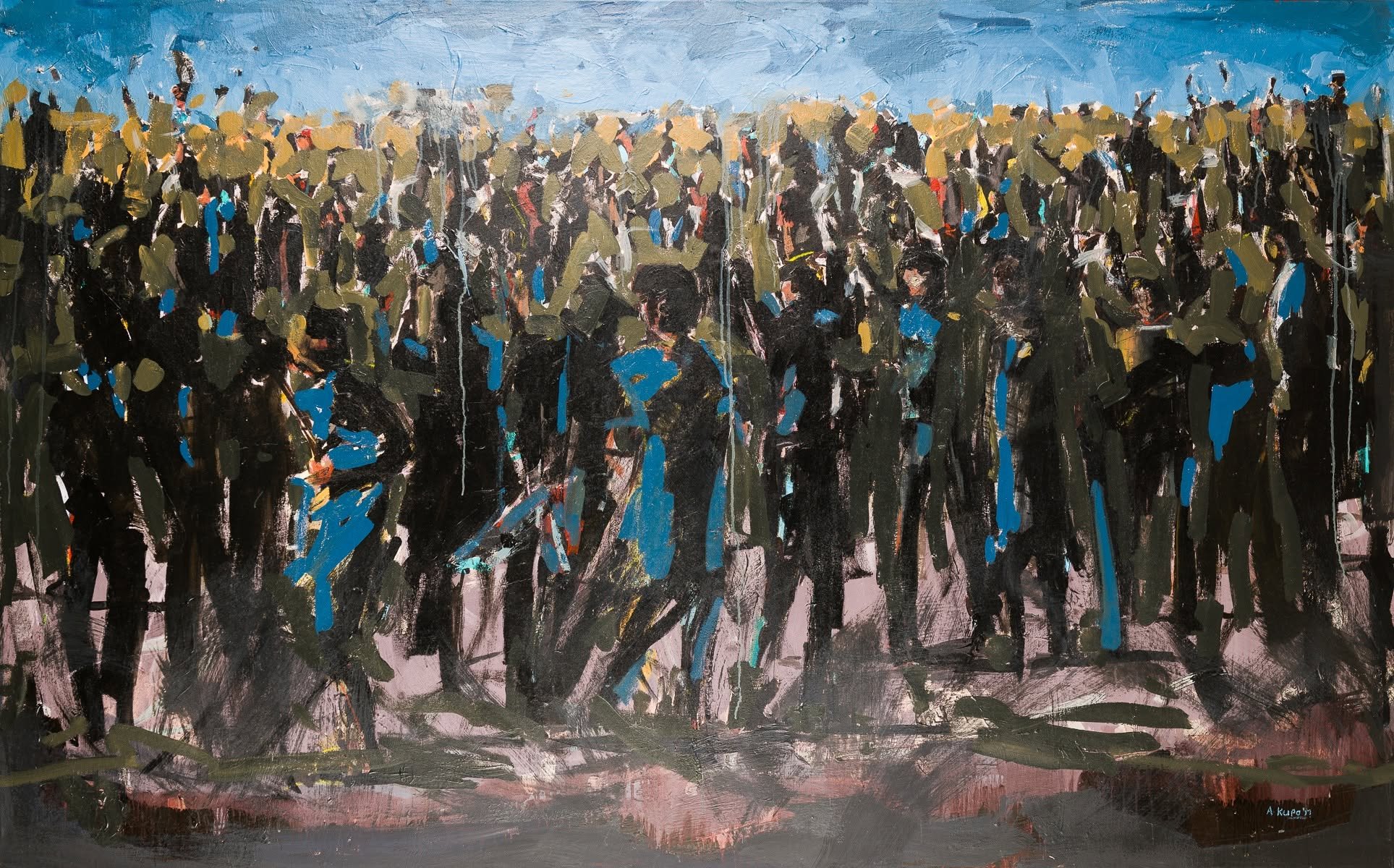
Chained in Blue (2017, oil on canvas) Asanda Kupa. A densely packed, protesting crowd painted in light of the socio-political history of South Africa. Kupa's composition explores themes of unity, resistance, and the collective voice of the marginalized, bringing to mind historical uprisings and the continuing struggle for freedom.
We recognize the importance of arts, history, and culture as vehicles for representation and belonging.
At Janus, we believe that law is not only a set of rules but a way of making sense of people's lives. Our work is rooted in knowledge sharing and in the lived experience of transition: the moments when borders, laws, identities, and futures are renegotiated. Through the lenses of migration, human rights, and transitional justice, we seek to understand not just what the law says, but how it feels to live inside it.
World culture, artistic expression, and history are essential to that understanding.. Music, literature, paintings, and cultural practices carry the voices that legal texts often silence: the grief of displacement, the stubbornness of hope, the complexity of belonging after violence. Stories and songs do not replace legal analysis; they deepen it. They remind us that every file, every case, every policy debate is about people navigating uncertainty, loss, and the possibility of rebuilding.
In this first volume of Janus: Through Art, Culture, and History we take a look at seminal literary pieces, examine a cultural event with the Gacaca trials in Rwanda, and offer a selection of world music related to our central themes.
Literature

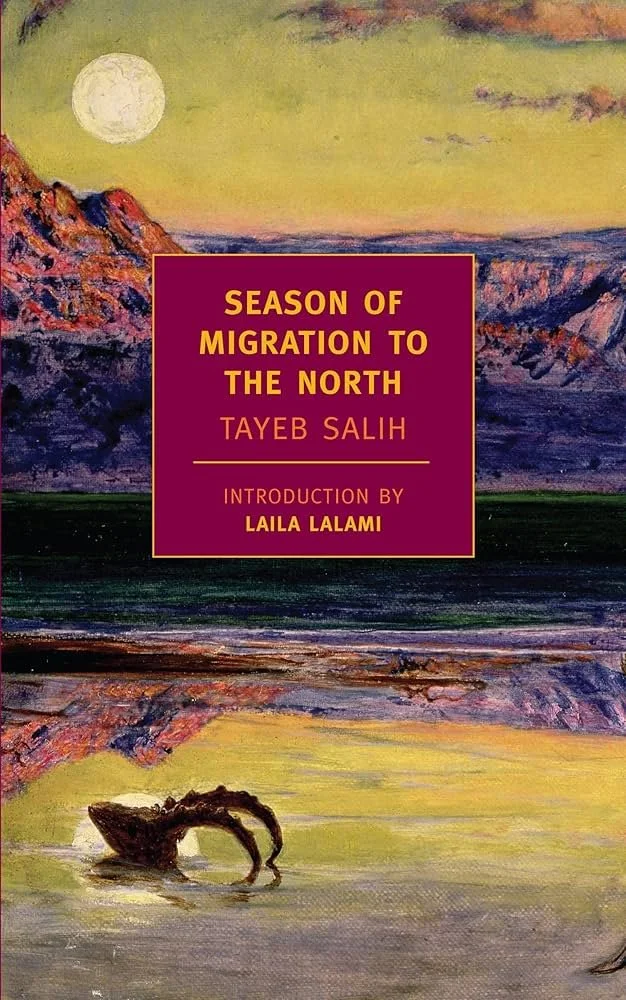
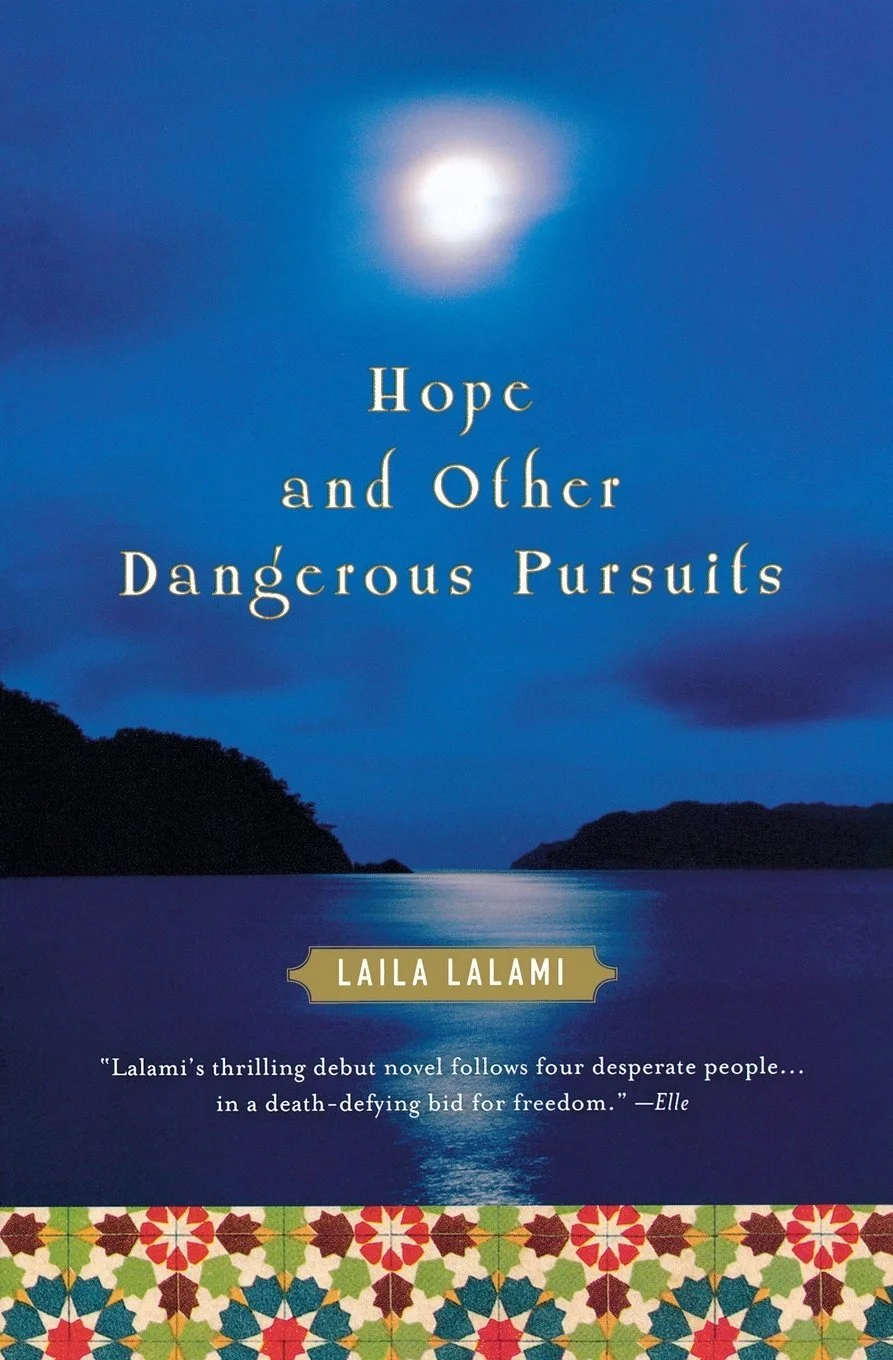
We begin with three books that speak directly to our themes.
Half of a Yellow Sun by Chimamanda Ngozi Adichie traces loyalty, betrayal, and the cost of war through the Biafran-Nigerian conflict, showing how civilians—especially refugees and migrants—are caught in the making and breaking of states.
Season of Migration to the North by Tayeb Salih follows two Sudanese men moving between Sudan and England, exposing migration as a psychological and cultural dislocation that fractures identity and belonging.
Hope and Other Dangerous Pursuits by Laila Lalamai follows four Moroccans who attempt the dangerous crossing to Spain, tracing their lives before and after the journey to expose the economic precarity, social invisibility, and moral ambiguities of migration between North Africa and Europe
Each of these works illuminates a different facet of transition: the violence that forces people to move, the inner turmoil of living between worlds, and the precarious hope that drives movement in the first place. Together, they offer a literary entry point into the same questions we confront in our legal work: Who is protected, and who is left behind? What does justice look like when home has been lost or transformed?
Taken together, these three novels form a literary map of the same routes, borders, and dilemmas that dominate today’s headlines. Half of a Yellow Sun shows how civilians are caught in the making and breaking of states, a dynamic that echoes in contemporary conflicts especially in the field of transitional justice. Season of Migration to the North turns the lens inward, following two Sudanese men moving between Sudan and England to expose migration as a psychological and cultural dislocation that fractures identity and belonging. That inner rupture mirrors the experience of many migrants and descendants of migration in Europe today, who navigate integration pressures, racism, and contested notions of national identity.
Hope and Other Dangerous Pursuits brings this map to the present-day Mediterranean. Laila Lalami’s linked stories follow four Moroccans who attempt the dangerous crossing to Spain, tracing their lives before and after the journey to expose the economic precarity, social invisibility, and moral ambiguities of migration between North Africa and Europe. The novel’s opening scene, a small boat crossing the Strait of Gibraltar under cover of darkness, reads to almost foreshadow of the 2026 Ceuta “crisis”, when in July 2026 tens of thousands of mostly young Moroccans surged into the Spanish enclave. Just as Lalami’s characters are driven by unemployment, gendered violence, and the lure of work and dignity in Europe, the Ceuta surge was rooted in economic hardship, social inequality, and the perception that Europe offers a safe route to escape marginalization. These factors are only amplified by trafficking networks, instrumentalization, and misinformation.
Read alongside one another, the three books refuse simple narratives of “good” migrants or “bad” borders. Adichie’s Biafra-Nigeria conflict, Salih’s Sudan–England axis, and Lalami’s Morocco–Spain route all show migration and displacement as entangled with colonial legacies, state violence, and global inequality. At the same time, they foreground agency, desire, and the stubborn persistence of hope, even when that hope is dangerous, compromised, or punished by law. In that sense, they offer more than background reading for our work in migration, human rights, and transitional justice; they offer a language for understanding what is at stake when borders close, when asylum systems harden, and when people are forced to bet their lives on a crossing, a claim, or a chance to belong.
Culture & History
Gacaca Justice – Rwanda (Journeyman Pictures, 2010)
To move from literature to lived justice, we turn to Gacaca Justice, a documentary that takes us inside a Gacaca hearing in a rural village in southern Rwanda. The video shows how transitional justice is not an abstract concept but a series of painful, face‑to‑face encounters in which truth, guilt, and the possibility of coexistence are negotiated in public.
Gacaca, meaning “on the grass,” is the traditional place where communities gathered to resolve disputes in Rwanda. It was adapted after the genocide into a nationwide system of lay tribunals. Its stated aim was not only to prosecute perpetrators but to enable survivors and former killers to live side by side again. The documentary captures this tension: witnesses recount atrocities and name those responsible, while the accused speak of their own suffering and seek forgiveness in exchange for confession. In doing so, the film illustrates core questions in transitional justice: What does accountability look like when entire communities are implicated? How can law address both individual crimes and collective trauma? And what does “justice” mean when the alternative may be renewed violence or permanent exile?
For Janus, this video is a reminder that legal mechanisms are never neutral technical tools. They are embedded in histories of displacement, loss, and the struggle to rebuild a sense of home. The Gacaca courts were designed to help a society fractured by genocide imagine a future in which Hutu and Tutsi could once again share the same villages, markets, and schools. That ambition resonates with our own work:. Watching this hearing, we are invited to consider not only what the law can punish, but what it might help people survive, remember, and rebuild.
Music
This playlist brings together songs that reflect on borders, conflict, identity, resistance, survival, and social change. Moving between protest music, historical memory, political commentary, and expressions of personal resilience, the selection offers another way of exploring Janus’s central themes.
The playlist opens with “Borders” by M.I.A., a sharp meditation on migration, exclusion, and the human consequences of borders. It is followed by “Six Days” by DJ Shadow, “1 × 1” by Cold War Kids, and “Beds Are Burning” by Midnight Oil. These works directly evoke the passage of time, political division, historical responsibility, and the demand for justice.
The final selections turn more directly toward resistance and transformation. “Risk to Exist” by Maxïmo Park asks what it means to remain politically and morally engaged in a world marked by inequality. “Zombie” by The Cranberries confronts the enduring trauma of political violence, while “A Change Is Gonna Come” by Sam Cooke closes the playlist with a powerful expression of hope and the possibility of social change.
Together, these works demonstrate how music and culture can challenge dominant narratives and create space for solidarity. They remind us that history is not only found in archives, judgments, and official records. It also lives in lyrics, images, rhythms, and collective acts of remembrance. This playlist is an invitation to listen critically and reflect on the ways art helps us understand both the injustices of the past and the possibilities of a more just future.
We hope this first edition of Through Art, Culture and History offers more than a list of recommendations. It is an invitation to read, watch, and listen with care. To reflect on the ways migration, violence, memory, justice, and belonging shape individual lives and collective histories. The works featured here do not offer easy answers, but they create space for difficult questions: how we remember harm, how we respond to displacement, and how we imagine repair and coexistence.
At Janus, we believe that meaningful knowledge sharing begins with conversation. If a book, film, song, artist, cultural event, or resource has helped you think differently about migration, human rights, or transitional justice, we would be glad to hear from you. Please get in touch with your suggestions, reflections, and recommendations. We may feature them in a future volume of this series!